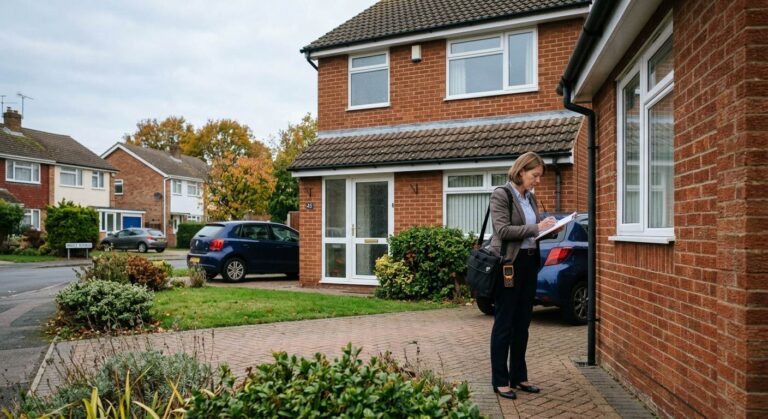




Why My SMSF Auditor Rejected My Real Estate Agent Appraisal (And What To Do Now)
If you’ve just had your SMSF auditor knock back a real estate agent’s appraisal for one of your fund’s properties, you’re not alone — and you’re probably a bit annoyed. You paid for the appraisal, it looked professional enough, and now you’re being told it’s not good enough for your SMSF annual audit.
The short answer is that the ATO tightened its expectations around SMSF property valuation evidence, and a lot of agent appraisals simply don’t meet the bar anymore. It’s not that agents are unqualified to comment on property prices — it’s that a basic appraisal letter, on its own, often doesn’t contain the kind of supportable data an auditor is required to see.
In this article, we’ll walk through exactly why this happens, what the ATO actually expects from SMSF trustees, what auditors are required to assess, and what your options are if your appraisal has been rejected — including when it makes sense to obtain a formal property valuation assessment instead.
Summary
SMSF auditors are required, under Superannuation Industry (Supervision) Regulation 8.02B, to confirm that fund assets are reported at market value each year, backed by objective and supportable evidence. A one-page real estate agent appraisal with no comparable sales data, no methodology and no explanation of how the figure was reached generally doesn’t meet this standard on its own — which is why it gets rejected.
The key factors at play are: the quality and detail of the evidence (not just who provided it), whether comparable sales are listed, whether the valuation basis is clearly explained, and whether the property is a “higher risk” asset such as one involved in a related-party transaction or lease. If your auditor has flagged your appraisal, you generally have three options: ask the same agent for a more detailed appraisal with comparable sales attached, get a second appraisal from another agent to support the first, or commission a proper valuation from an independent, qualified valuer. For related-party transactions, acquisitions, or anything materially affecting a member’s balance, an independent valuer’s report is usually the safer and sometimes the only acceptable route. Trustees should also know that failing to resolve this can lead the auditor to lodge an Auditor Contravention Report (ACR) with the ATO, which is worth avoiding if you can.
What Does “SMSF Property Valuation” Actually Mean?
Every SMSF trustee has a legal obligation under super law to make sure the fund’s assets — including any investment property — are reported at their market value each financial year, not the price you paid for it five years ago and not a figure someone’s guessed at.
This isn’t optional and it isn’t a “once every few years” thing. SIS Regulation 8.02B requires trustees to value fund assets at market value when preparing the fund’s financial statements, and understanding the SMSF valuation requirements helps trustees know when stronger valuation evidence may be needed before an audit.
That’s where the appraisal or valuation comes in — it’s the evidence your auditor relies on to confirm the number in your accounts is real.
Why a Real Estate Agent Appraisal Gets Rejected
Here’s the bit that catches a lot of trustees out: an appraisal from a real estate agent isn’t automatically unacceptable. The ATO’s own guidance lists an appraisal from an independent real estate agent as one of several types of evidence that can support an SMSF property valuation.
The problem is almost never “who wrote it” — it’s “what’s actually in it.”
The usual culprits
Most rejected appraisals fall into one of these categories:
- A single-page letter with just a dollar figure. Something like “In my opinion, this property is worth $850,000” with no explanation of how that number was reached.
- No comparable sales listed. Auditors need to see what similar properties in the area actually sold for, and when.
- No date or a stale date. An appraisal from 18 months ago doesn’t reflect current market value.
- The agent isn’t independent. If the agent has a personal or business relationship with a fund member (for example, they’re a relative, or they manage the property and stand to earn an ongoing commission), that undermines the independence auditors are required to assess.
- It’s a “bulk” or automated estimate, such as a CoreLogic or PropTrack online figure with no human assessment behind it, presented as the sole piece of evidence.
Auditing standards (specifically ASA 500 on audit evidence) require your auditor to gather “sufficient appropriate evidence” before forming an opinion. A one-liner from an agent, without supporting data, generally doesn’t clear that bar — even though the ATO doesn’t technically ban real estate agent appraisals outright.
It’s about quality, not just quantity
One thing that trips people up: getting more paperwork isn’t automatically the fix. The SMSF Association discusses SMSF asset valuation compliance, including how evidence quality affects audit outcomes — the issue is when the one piece of evidence you’ve provided is thin. A single, properly documented appraisal with comparable sales can be accepted. Three vague appraisals with no comparable sales attached won’t fix the underlying problem.
What Your Auditor Is Actually Required to Check
It helps to understand what’s going on from your auditor’s side of the desk, because it explains why they can’t just wave your appraisal through as a favour.
Under the auditing standards that apply to SMSF audits, your auditor must:
- Confirm the fund’s property has been reported at market value in the financial statements.
- Obtain objective, supportable evidence for that value — either from you as trustee or from external sources.
- Assess whether the valuation basis is appropriate for that particular asset.
- Document their reasoning and the evidence they relied on.
If they can’t tick all four boxes, they have two options: qualify the audit report (essentially flag a concern in Part A and/or Part B of the audit), or lodge an Auditor Contravention Report (ACR) with the ATO if they believe the fund hasn’t met its obligations under Regulation 8.02B.
Because property usually makes up a big chunk of an SMSF’s total assets, auditors tend to treat property valuation issues as material — meaning they’re less likely to overlook a thin appraisal than they might for a smaller, less significant asset.
Worth knowing: the ATO has been paying closer attention here. It’s flagged an increase in Regulation 8.02B breaches being reported by auditors, and has specifically scrutinised thousands of SMSFs that reported the same property value for three or more years running — a pattern that suggests no genuine annual revaluation was happening at all.
When a Basic Agent Appraisal Won’t Cut It — Even If It’s Detailed
There are a few situations where auditors (and the ATO) expect more than even a well-documented agent appraisal, regardless of how much comparable sales data is attached:
- Related-party transactions. If your SMSF is buying property from, or selling property to, a fund member or someone connected to them (a classic example is buying a farm or business premises from a related party under the business real property exemption), the ATO’s expectation shifts toward an independent, qualified valuation.
- Related-party leases. If your SMSF owns a commercial property leased to a member’s business — a common setup under the related-party business real property rules — the auditor will usually want a rental appraisal that clearly shows how the market rent was determined, not just a figure.
- Property acquisitions or disposals affecting member benefits materially, such as when a valuation feeds into calculating a member’s total super balance or transfer balance cap.
- Unusual or hard-to-value properties — rural land, properties with development potential, or anything with an unusual title structure (like strata title complexities in NSW or community title in Queensland).
In these cases, a Certified Practising Valuer (CPV) registered with the Australian Property Institute is generally seen as the more defensible option, because their independence and qualifications aren’t in question the way an agent’s can sometimes be.
What To Do If Your Appraisal Was Rejected
If you’re in this position right now, here’s a practical way to work through it.
Step 1: Ask your auditor exactly what’s missing
Don’t guess. Auditors will usually tell you specifically what they need — whether that’s comparable sales data, a clearer methodology, or a different type of evidence altogether. This saves you paying for a second appraisal that has the same problem as the first.
Step 2: Decide whether an updated agent appraisal will actually solve it
If the issue is simply that your existing appraisal lacked comparable sales or a date, you may be able to go back to the same agent (or a different one) and ask for a proper Comparative Market Analysis (CMA) that includes:
- At least two to three genuinely comparable recent sales in the area
- The date the appraisal was prepared
- A brief explanation of how those comparables were used to reach the figure
- Confirmation the agent has no personal or financial interest in the property
Step 3: Consider an independent valuation for higher-risk situations
If your property is involved in a related-party transaction or lease, or your auditor has specifically asked for an independent valuation, it’s usually more efficient to go straight to a qualified, independent property valuer rather than going back and forth with agent appraisals that might still get rejected.
An independent SMSF property valuation typically includes a documented methodology, comparable sales analysis, consideration of the property’s specific condition and zoning, and a clear market value conclusion — the kind of report an auditor can rely on without needing to chase further evidence.
Step 4: Keep records for next year
Once you’ve got a valuation or appraisal your auditor accepts, keep it on file along with council rate notices and any other supporting documents. Depending on your auditor’s approach, you may not need a brand-new full valuation every single year — some auditors will accept an updated declaration plus supporting evidence in interim years, provided nothing material has changed. Ask your auditor what their expectations are for the following year so you’re not caught out again.
Common Misconceptions About SMSF Property Valuations
“The purchase price is fine until we sell it.”
No — SIS Regulation 8.02B requires market value to be reassessed annually, not carried forward indefinitely, even if nothing has “happened” to the property.
“An online estimate from CoreLogic or Domain is good enough.”
On its own, generally not. These automated valuation models can’t account for a specific property’s condition, recent renovations, or unique features, so they’re usually only accepted as supporting evidence, not standalone proof.
“Council rates notices show my property’s value.”
Council valuations are for rating purposes across a whole council area, not an individual market assessment — they’re not accepted as standalone evidence of market value.
“My accountant can just estimate it.”
Trustees (and by extension, their accountants acting on trustee instructions) aren’t considered independent for this purpose. Self-assessment isn’t acceptable as the sole basis for market value.
FAQs
Does the ATO require a full valuation every year for SMSF property?
Not necessarily a full independent valuation every year. What’s required is that the value reported is genuinely reassessed annually and supported by objective evidence. Many trustees use a full valuation periodically (say, every two to three years) and supporting evidence — such as a signed trustee declaration, comparable sales, and confirmation nothing material has changed — in the years between.
Can I use the same real estate agent every year for my SMSF appraisal?
Yes, as long as the agent remains independent (no personal or financial connection to fund members) and each appraisal is properly documented with current comparable sales and a clear date.
What happens if my auditor lodges an Auditor Contravention Report over my property valuation?
An ACR notifies the ATO that your auditor believes the fund may have breached super law — in this case, Regulation 8.02B. It doesn’t automatically mean penalties, but it does put your fund on the ATO’s radar for further review, and repeated or unresolved issues can lead to compliance action.
Is a bank valuation acceptable for SMSF audit purposes?
A bank’s desktop valuation (often done for lending purposes) generally isn’t sufficient as the sole piece of evidence, for similar reasons to agent appraisals and online estimates — it’s usually a quick assessment without the depth of comparable sales analysis an auditor needs to see.
Who counts as an “independent” valuer for SMSF purposes?
Someone with no financial or personal interest in the property, and no relationship (family, business, or otherwise) with any fund member. A real estate agent who’s also a friend or relative of a trustee, for example, wouldn’t be considered independent.
Does this apply the same way in every state?
The core super law requirements (SIS Regulation 8.02B and the ATO’s valuation guidelines) apply Australia-wide. What can vary by state or territory is the type of property title involved (such as strata in NSW/Victoria or community title in Queensland) and the availability of comparable sales data, which can affect how straightforward a valuation is to support.
Conclusion
A rejected agent appraisal usually comes down to missing detail, not the agent being unqualified. Auditors need objective, supportable evidence — comparable sales, a clear methodology, and genuine independence — to sign off under Regulation 8.02B. For related-party transactions or higher-risk properties, an independent valuation is generally the safer path. Talk to your auditor first about exactly what’s missing before paying for anything new.
Need an Independent SMSF Property Valuation?
If your fund’s property sits in a related-party transaction, a related-party lease, or your auditor has specifically asked for an independent valuation rather than an agent appraisal, it can be worth getting a qualified valuer’s report sorted before it holds up your audit. Expert Court Property Valuers prepares independent SMSF property valuation reports that auditors can rely on, with the comparable sales analysis and documented methodology built in. You can reach them on +61 438 080 786 to talk through what your fund’s property and audit situation actually needs.