


How Much Is My Warehouse Worth? A Guide to Industrial Property Valuation
Most people who ask what their warehouse is worth are asking because something has forced the question. Maybe you’re separating from a partner and the business property is on the table. Maybe you’re administering an estate, or a lease dispute has landed on your desk, or the government has come knocking about a resumption. Whatever the trigger, a number that looks reasonable from the outside can fall apart the moment a lawyer or a judge starts asking questions.
This guide walks through how industrial property is valued in Australia, how it fits within broader commercial and industrial property categories, what moves the figure up or down, and what a court or tribunal will expect to see in the evidence. It’s written for owners, solicitors, accountants and anyone else who needs to understand a warehouse valuation before it ends up in front of a decision-maker.
Industrial Property Valuation: What Makes a Warehouse Worth What It Is
An industrial property valuation estimates the market value of a warehouse, factory, distribution centre or similar building and the land beneath it. Market value is the price a willing buyer would reasonably pay a willing seller, in an arm’s length deal, with both sides acting knowingly and without pressure. That definition sounds simple, but it means the valuer has to ignore what you paid, what you need the money for, and what you’d like the number to be.
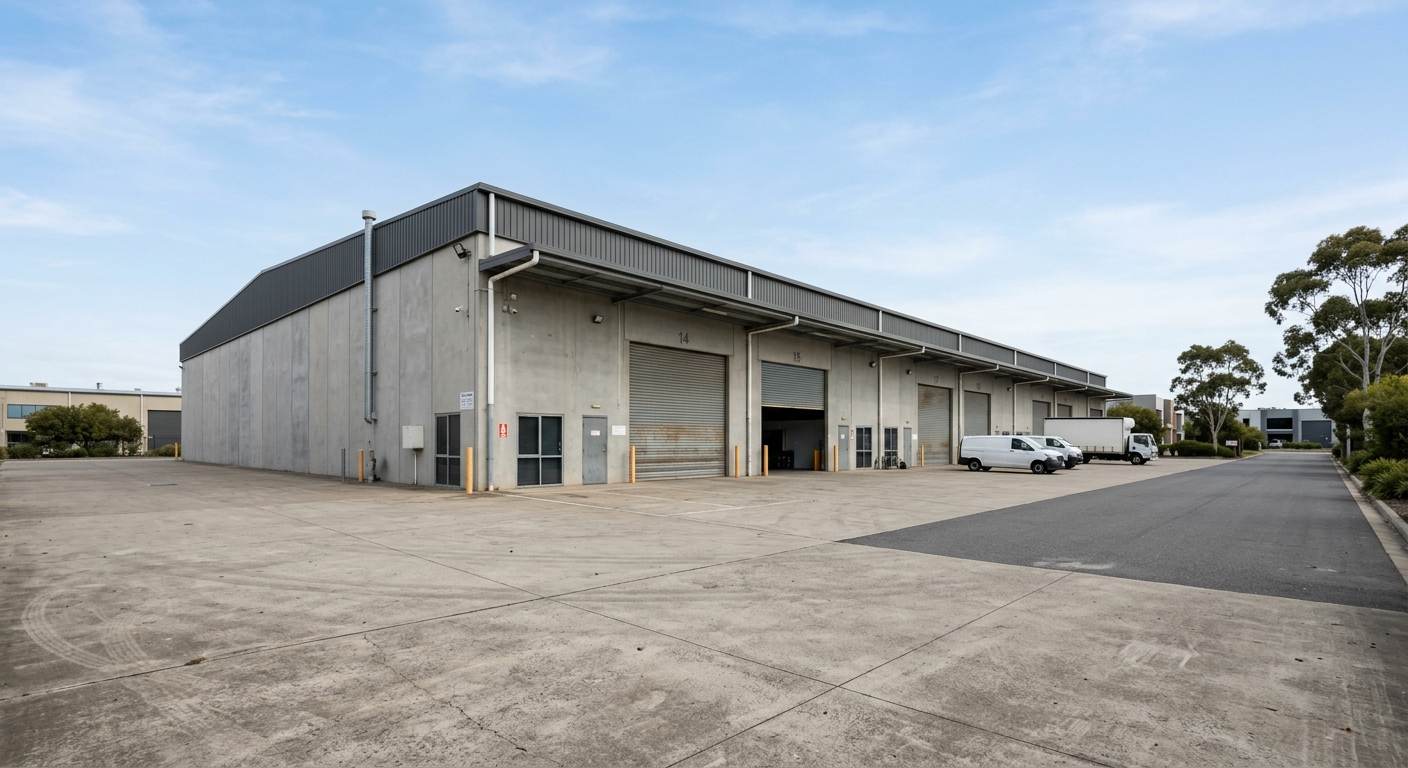
Industrial buildings are valued differently from houses for a few reasons. Buyers pay close attention to how a building functions as a workplace, not just how it looks, because transport access and practical building features can make a real difference to its value. They also care about who’s leasing it, for how long, and at what rent. A warehouse with a tenant on a long lease to a reliable business can sell for a very different figure than the same building sitting empty.
The Main Valuation Methods
Valuers generally use one or more of three approaches, and which one carries the most weight depends on the property.
Direct comparison looks at what similar properties have recently sold for. The valuer compares land size, building area, age, condition, location, zoning and access, then adjusts for the differences. This is the most common method for owner-occupied warehouses and generally the most persuasive in court, provided there are enough genuine sales to rely on.
Income capitalisation is used where the building is leased. The valuer looks at the rent the property is earning, or could reasonably earn, and divides it by a capitalisation rate that reflects what investors are paying for similar income. Rent review terms, lease length, outgoings and the strength of the tenant all affect the result. A tenant with a 10-year lease and a strong covenant is worth more than a short lease to a business that’s struggling.
Discounted cash flow projects future income and costs over a holding period, then discounts them back to a present value. It’s used more for larger or complex assets, and it relies heavily on assumptions, so you’ll generally see it used alongside the other methods rather than on its own.
For specialised facilities, such as cold stores, purpose-built manufacturing plants or sites with significant infrastructure, a valuer may also use a cost-based approach. This estimates what it would cost to replace the improvements, less depreciation, and adds the land value. It’s a supporting method in most cases, not the headline number.
The Factors That Move the Number
Two warehouses on the same street can be valued quite differently. These are the features valuers look at most closely:
- Land area and site coverage: how much of the block is built on, and whether there’s room for trucks to turn, park and manoeuvre.
- Clear internal height: the vertical space from floor to the lowest obstruction. Modern distribution buildings often have clear heights of around 10 metres or more, and that matters a lot to some tenants.
- Loading facilities: roller doors, dock levels, and the number and position of loading bays.
- Office component: the size and quality of the office space, amenities and air conditioning.
- Hardstand and yard area: sealed external areas for vehicles, containers or storage.
- Power and floor loading: available electrical capacity and how much weight the slab can carry. These are particularly important for manufacturing or heavy storage.
- Zoning: under the standard NSW planning framework, for example, the difference between IN1 General Industrial and IN2 Light Industrial can affect what uses are permitted and therefore who can buy or lease the property. Zoning rules differ between states and councils, so always check the local planning instrument.
- Lease terms: the rent, the length of the lease (often described as the weighted average lease expiry, or WALE), whether it’s a net lease where the tenant pays outgoings, and the rent review structure.
- Environmental issues: contamination, underground tanks or previous uses such as fuel storage or manufacturing can reduce value and may need specialist assessment.
Owner-Occupied Versus Leased
Owner-occupied warehouses are usually valued on a vacant possession basis, meaning the value assumes the property is free to be used or sold without a tenant in place. That’s because the buyer will typically either occupy it or find a new tenant. Leased warehouses are valued with the lease in place, so the rent and its terms become central to the figure.
This distinction catches people out. A business owner who has been paying themselves market rent through a related entity may find the building is valued quite differently from what they expected, depending on how the lease is structured and whether it reflects market terms.
Why Industrial Property Valuation Matters in Legal Disputes
In a court setting, the valuation isn’t just a number. It’s evidence, and it needs to stand up to cross-examination. Lawyers will want to know what the valuer inspected, what sales and rental evidence was relied on, what assumptions were made, and why.
Family Law Property Settlements
In family law, the court considers the property pool, including any business premises held by one or both parties. Where a warehouse is used in a business, the court may need to separate the value of the real estate from the value of the business itself, including goodwill and any plant and equipment. Those are different asset classes and are often treated differently.
Valuation dates matter too. The court usually looks at values as close as practicable to the hearing or the settlement, so a valuation done too early can become stale if the market has moved. This is one reason why a valuation that was accurate two years ago may not be useful today.
Deceased Estates and Estate Disputes
When someone dies, the executor or administrator generally needs to establish values as at the date of death for estate administration and, where relevant, capital gains tax purposes. If beneficiaries disagree about the value of a warehouse, the dispute often turns on whether the valuer used appropriate comparable sales and whether the lease, condition and market conditions at that date were properly considered.
Lease Disputes and Rent Reviews
Industrial leases often include market rent reviews, and disagreements about what the market rent actually is are common. Where the parties can’t agree, the valuation evidence usually becomes central. A valuer who can show comparable leases, rental evidence and the reasoning behind their figure is in a much stronger position than one relying on general impressions.
Compulsory Acquisition
In NSW, the Land Acquisition (Just Terms Compensation) Act 1991 sets out how compensation is calculated when land is compulsorily acquired by an authority. Compensation generally includes the market value of the land, and may also include other losses, depending on the circumstances. Owners often find the initial offer doesn’t reflect the full value of the business and property, so independent evidence is important. Each state has its own compulsory acquisition framework, so the rules that apply in Queensland or Victoria will be different.
Common Misconceptions About Warehouse Values
“The rates notice tells me what it’s worth.”
In NSW, valuations prepared by the Valuer General are used for rating and land tax purposes, but they assess land value rather than the market value of the warehouse and its buildings. They can be well out of date.
“I can use what I paid for it.”
The purchase price is a historical fact. It may be relevant context, but it doesn’t determine current market value.
“Bigger buildings are always worth more.”
Size helps, but a large building in poor condition, with limited access or a weak lease, may be worth less per square metre than a smaller, modern facility in a strong location.
“A real estate agent’s appraisal is the same as a valuation.”
Agents often give an opinion of selling price for marketing purposes. A formal valuation is prepared by a qualified valuer, follows professional standards and is designed to withstand scrutiny.
Questions to Ask Before You Commission a Valuation
If you’re thinking about getting a warehouse valued, it helps to know what you’re going to need the valuation for before you start. A valuation prepared for a bank loan is different from one prepared for a family law matter, and both are different from one prepared for a compensation claim.
Ask whether the valuer is a member of the Australian Property Institute and whether they hold the Certified Practising Valuer designation. Ask whether they’ve prepared valuations for court or tribunal matters before, and whether they understand the expert witness obligations that apply in those settings. Make sure they’ll inspect the property properly and that you understand the valuation date and basis of value they’re using.
It’s also worth asking your solicitor or accountant which type of valuation they need, because the wrong type can waste time and money.
Frequently Asked Questions
How much does an industrial property valuation cost in Australia?
Fees depend on the size and complexity of the property, the purpose of the valuation and whether the valuer needs to give evidence in court. A straightforward owner-occupied warehouse will usually cost less than a leased, multi-tenant or litigation-related valuation. Get a written fee quote before you commit.
Can a warehouse be valued without an inspection?
Some desktop valuations are possible, but for a formal report that may be used in court, an inspection is almost always needed. The valuer needs to see the building’s condition, layout, access and any features that affect value.
Does a court always accept the valuer’s figure?
No. Courts weigh the evidence, and the other side is entitled to challenge it. That’s why the quality of the reasoning and the supporting evidence matter as much as the final number.
Is a warehouse valued differently for family law and tax purposes?
The purpose and valuation date can differ, so the same property may need different reports. Your solicitor or accountant can confirm what’s required for each matter.
What’s the difference between market value and replacement cost?
Market value is what a buyer would pay for the property. Replacement cost is what it would cost to rebuild, which is used mainly for insurance and for specialised buildings. The two can be quite different.
Do I need a valuation for a warehouse lease renewal?
Not always, but if you and your landlord or tenant can’t agree on market rent, an independent valuation or rental assessment can help resolve the matter.
Conclusion
A warehouse is worth what a willing buyer would pay for it on the valuation date, and working that out depends on the building, its land, its lease and the market around it. Income, comparable sales and cost each play a role, and the right mix depends on whether the property is owner-occupied or leased. When the figure is going to be used in a court, tribunal or estate matter, the evidence behind it matters just as much as the number. Expert Court Property Valuers, phone +61 438 080 786, can help if you need an independent industrial valuation prepared with that scrutiny in mind.